Whitepapers

‘What qualities does a good selection technique have?’

This paper explains the qualities that make selection techniques effective and fair predictors of job performance. Good selection methods must demonstrate reliability, meaning consistent results across time, items, and assessors, and validity, meaning they accurately measure what they claim to assess. Research and meta-analyses show that psychometric methods such as cognitive ability tests, personality assessments, structured interviews, assessment centres, and biodata offer strong predictive validity. Each has strengths and limitations regarding cost, fairness, and adverse impact. The paper concludes that the best selection systems combine multiple valid and reliable tools, supported by rigorous design and continuous validation, to ensure fair, evidence-based hiring decisions.

‘What qualities does a good selection technique have?’ Read More »

LEADERS ARE NOT ENOUGH

This paper argues that while leadership is important, true business success depends on the presence of wealth creators, individuals with exceptional resilience, vision, and drive who turn challenges into opportunities. Wealth creators are rare and can exist at any level of an organisation, not just in senior leadership. They combine self-belief, commercial focus, and strategic thinking to generate growth and innovation. Many leaders lack these traits and must partner with or support wealth creators to achieve sustainable success. Organisations that recognise, develop, and retain such individuals outperform those that overlook them.

LEADERS ARE NOT ENOUGH Read More »

Talent Management and Leadership Development

This paper explains how effective talent management must go beyond training courses or succession plans to align fully with business strategy. It involves recruiting, developing, and retaining people who can deliver the organisation’s goals and culture. Defining clear competencies is essential for integrating recruitment, development, and performance management. Objective assessments identify potential, while leadership commitment ensures progress. The paper emphasises building on individual strengths, providing real work experiences supported by coaching, and developing differentiated career paths. When executed well, talent management becomes the foundation for strong, future-focused leadership.

Talent Management and Leadership Development Read More »

People Strategy

This paper explains how a clear people strategy is essential to achieving business success. A people strategy defines how an organisation will use its talent to deliver on its objectives and should work in partnership with the business strategy rather than serve it. It outlines key components including mission, objectives, culture, structure, and talent management. Effective people strategies require leadership ownership, alignment with corporate goals, and regular review to remain relevant. When integrated into overall planning, the people strategy informs and strengthens business strategy, ensuring the organisation’s most valuable asset, its people, drives sustainable performance.

People Strategy Read More »

Best Practice In Employee Assessment

This paper outlines current best practices in employee assessment, emphasizing the proven validity of psychometric testing supported by extensive meta-analytic research. General mental ability (GMA) remains the strongest predictor of job performance, while emotional and social intelligence, though important, are closely linked to general ability and can be developed through coaching and behavioral assessment. Assessment and development centres, when well designed and combined with psychometrics, offer valuable insights into current skills and future potential. The paper concludes with practical recommendations for improving development centres, including focusing on realistic simulations, clear objectives, feedback, and leveraging individual strengths rather than merely correcting weaknesses.

Best Practice In Employee Assessment Read More »

Why Innovation is No Longer Optional

This paper argues that innovation is now essential for survival in every industry. True competitiveness depends not on lone geniuses or top-down management, but on empowered technical professionals who combine creativity, collaboration, and critical thinking. Research shows that innovation flourishes in cultures that value openness, teamwork, and psychological safety. Companies must invest in their technical talent, foster diverse, balanced teams, and align innovation with strategy to thrive in a rapidly changing world.

Why Innovation is No Longer Optional Read More »

Analyze that!

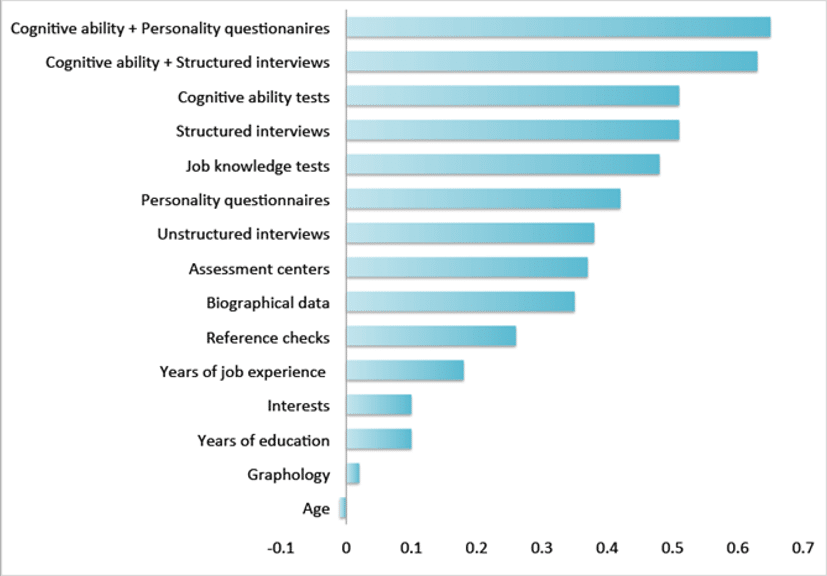
This paper shows that analytic and evidence-based assessments, especially combining cognitive ability and personality tests, are the most accurate way to predict job success. Unlike intuition or unstructured interviews, these methods provide objective and reliable insights into a candidate’s potential. HFI’s integrated psychometric approach, refined over 30 years, achieves exceptional predictive accuracy and helps organizations make smarter, data-driven hiring decisions.

Analyze that! Read More »

A practitioners guide to supporting business through recruiting and developing essential talent.

What does it take to align people with purpose?
In Chapter One of Strategic Human Resources, we meet Chris, a new HR partner determined to bridge the gap between business strategy and people strategy. As she navigates executive skepticism and organizational ambiguity, she begins to uncover the essential role HR plays in shaping capability, culture, and competitive advantage. This chapter lays the foundation for building a People Strategy that’s not just aligned with business goals but critical to achieving them.

A practitioners guide to supporting business through recruiting and developing essential talent. Read More »